

Pilates for Runners: What You're Missing
Running is simple. One foot in front of the other. But anyone who runs seriously knows it's anything but. Tight hips, weak glutes, a core that switches off the moment fatigue sets in. The injuries that sideline runners are almost never caused by running too much. They're caused by the imbalances that running quietly builds over time. Pilates for runners doesn't fix your technique by making you run differently. It fixes what running can't fix on its own.
Why Runners Need More Than Just Running
Running is repetitive by design. Every stride repeats the same pattern, through the same range of motion, loading the same muscles in the same sequence. That's what makes it effective as training. It's also what makes it a problem over time.
Repetition reinforces imbalances. The muscles that are already dominant get stronger. The ones that are underused get weaker. And at some point, the body starts to compensate in ways you don't notice until something hurts.
The best cross training for runners isn't another cardio session. It's the work that addresses what running leaves behind.
What Comprehensive Pilates Actually Targets in a Runner's Body
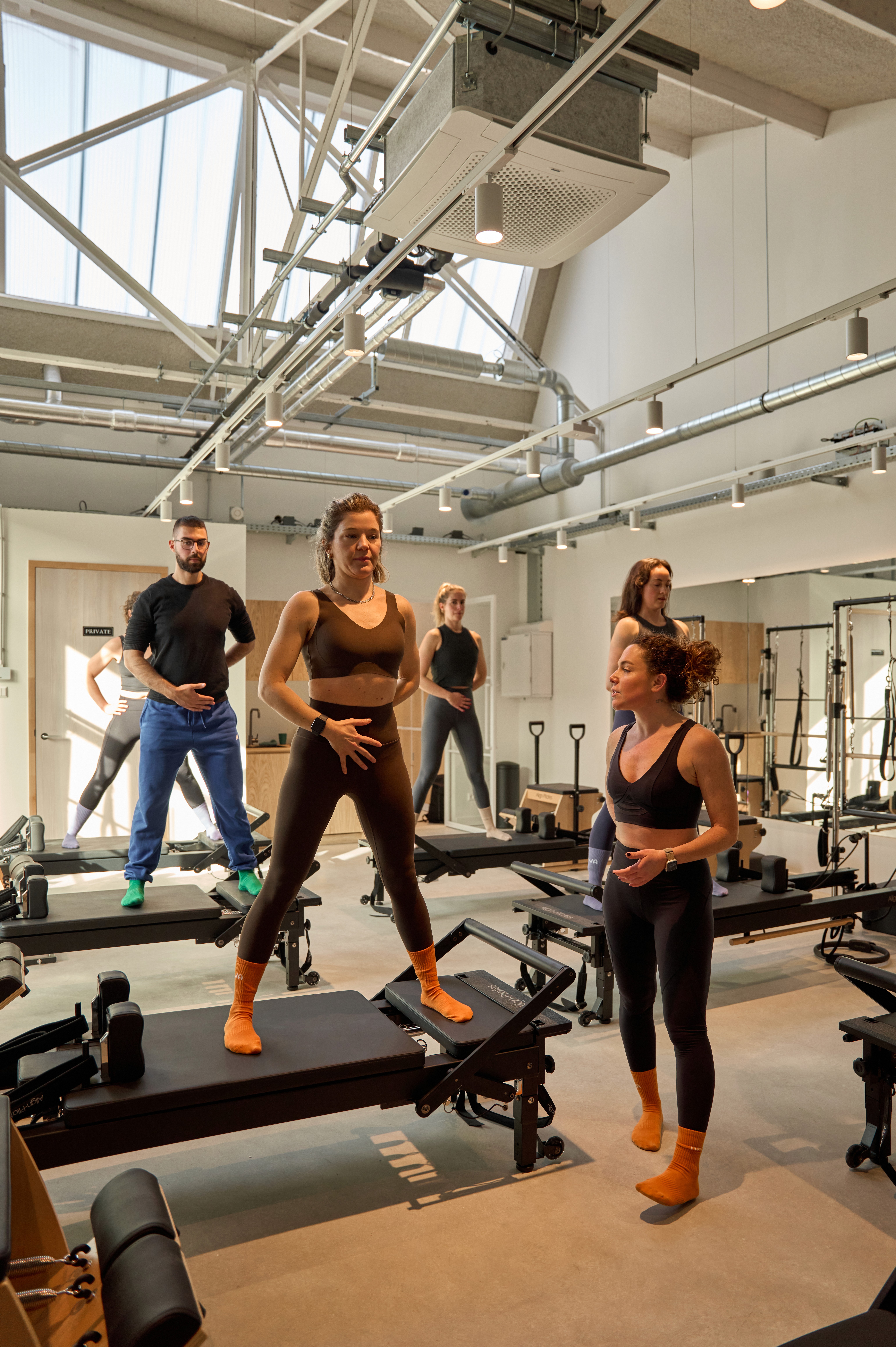
Pilates works in multiple planes of movement. It challenges your body laterally, rotationally, and in ranges of motion that forward movement simply never reaches. At UNA, we work with the Reformer, Half Cadillac, and Chair, which means your body gets challenged from angles and positions that a single piece of apparatus simply can't provide.
This targets the deep stabilisers, the hip rotators, the muscles around the pelvis that determine how efficiently and safely you run.
A strong, controlled core doesn't just support your spine. It transfers force more efficiently between your upper and lower body, which means less energy wasted, less compensation, and more left in the tank at kilometre 15.
Hip stability is another piece most runners overlook. Weak hip stabilisers are behind a significant number of running injuries, from runner's knee to IT band issues to chronic lower back pain. Comprehensive Pilates addresses all of it, directly and precisely.
Pilates for Running Injury Prevention
Most runners stretch. Some foam roll. Very few do the kind of controlled, loaded work that actually builds resilience in the tissues and joints that running stresses most.
At UNA, we work with runners who've been through the cycle: train, get injured, rest, repeat. What changes when they add Pilates isn't just their flexibility. It's the quality of how they move, which changes the entire equation.
Can Pilates make you a better runner? In our experience, it's one of the most direct routes there is.
What to Expect in a Pilates Class as a Runner
You'll probably find it harder than expected. The movements that expose imbalance are rarely the dramatic ones. A single-leg exercise on the Reformer, a hip stability sequence on the Chair, a controlled spinal rotation on the Half Cadillac. Small movements, precise demands, real results.
Two sessions a week alongside your running programme is enough to notice a difference. Most runners who start don't stop.
How Pilates Helps Improve Running Performance Over Time
The runners who get the most out of Pilates are the ones who stop thinking of it as cross training and start thinking of it as the work that makes their running possible. Not a supplement. A foundation.
Better core strength for runners means better form under fatigue. Better hip stability means fewer compensations. Better body awareness means catching problems before they become injuries.
If you're serious about running, you should be serious about how you move.
Book your first class at UNA: [unapilates.com]
More Posts
Newsletter

Premium Pilates studio dedicated to helping you build strength, flexibility, and mindfulness.
Contact
info@unapilates.com
+31 627901913
Pilotenstraat 11B-C
Amsterdam